01 / FABRICATION
Frames & structures
Fabricated steelwork for equipment, supports, skids, platforms and project-specific assemblies.

Fabrication and welding are at the heart of this service. We build the frames, brackets, supports and fabricated assemblies needed for hydraulic and industrial engineering projects — with machining carried out where the project requires it.
Not every engineering project can be solved by selecting an off-the-shelf component. Sometimes a frame, bracket, support, enclosure or fabricated assembly has to be made around the equipment and the job.
That's where our fabrication and welding capability comes in. We can work from drawings, dimensions, photographs or the requirement in front of us, then combine fabrication with the hydraulic and engineering work around it.
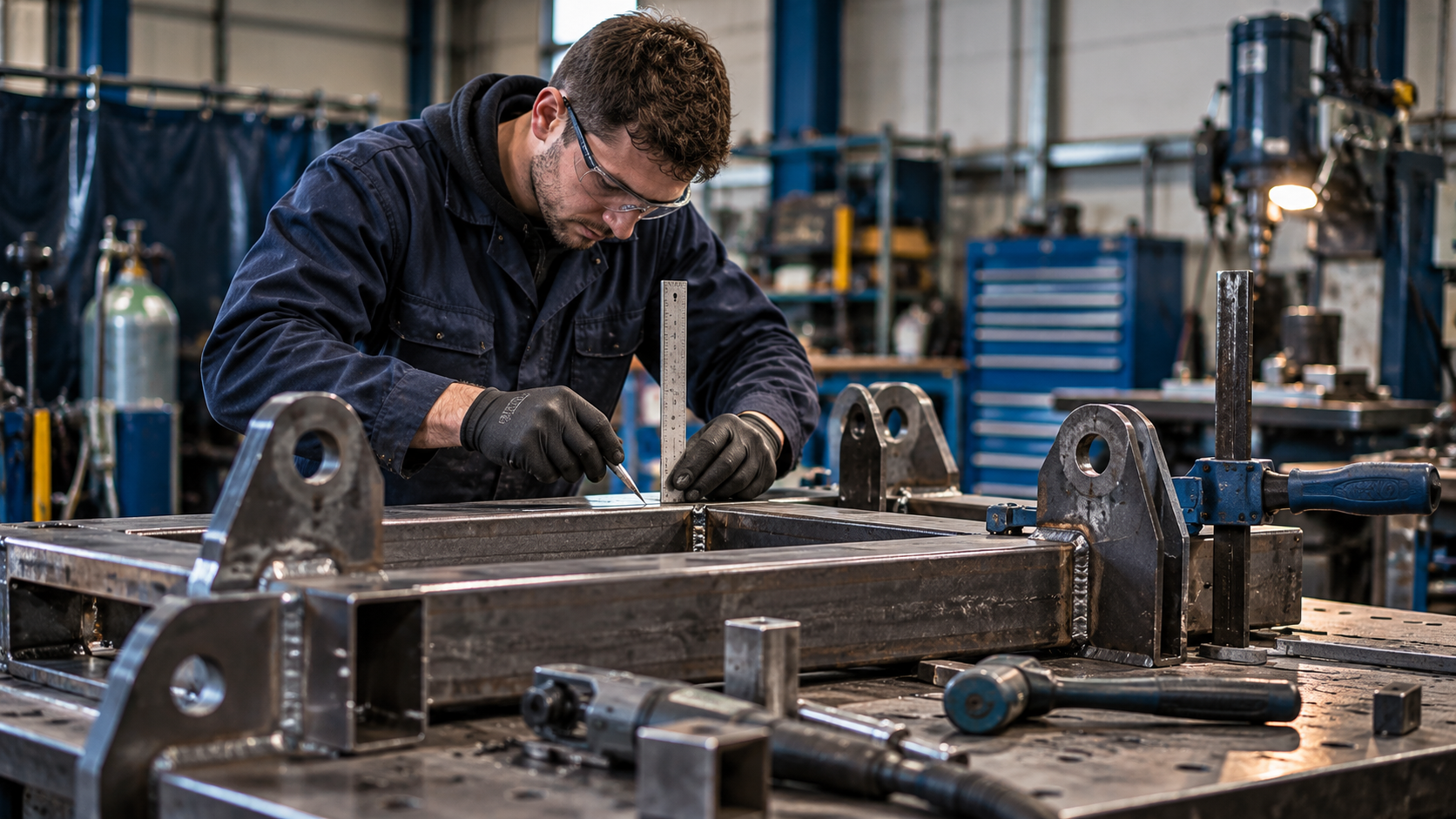
Our fabrication work supports the wider engineering project. The objective is not simply to make metalwork — it is to produce something that fits the application and works with the rest of the system.
Fabricated steelwork for equipment, supports, skids, platforms and project-specific assemblies.
Welded components and assemblies built around the dimensions, loads and practical requirements of the job.
Project-specific brackets, mounts, guards and supports where standard parts do not provide the right solution.
Fabrication can be developed alongside hydraulic equipment, pipework, controls and other project components.
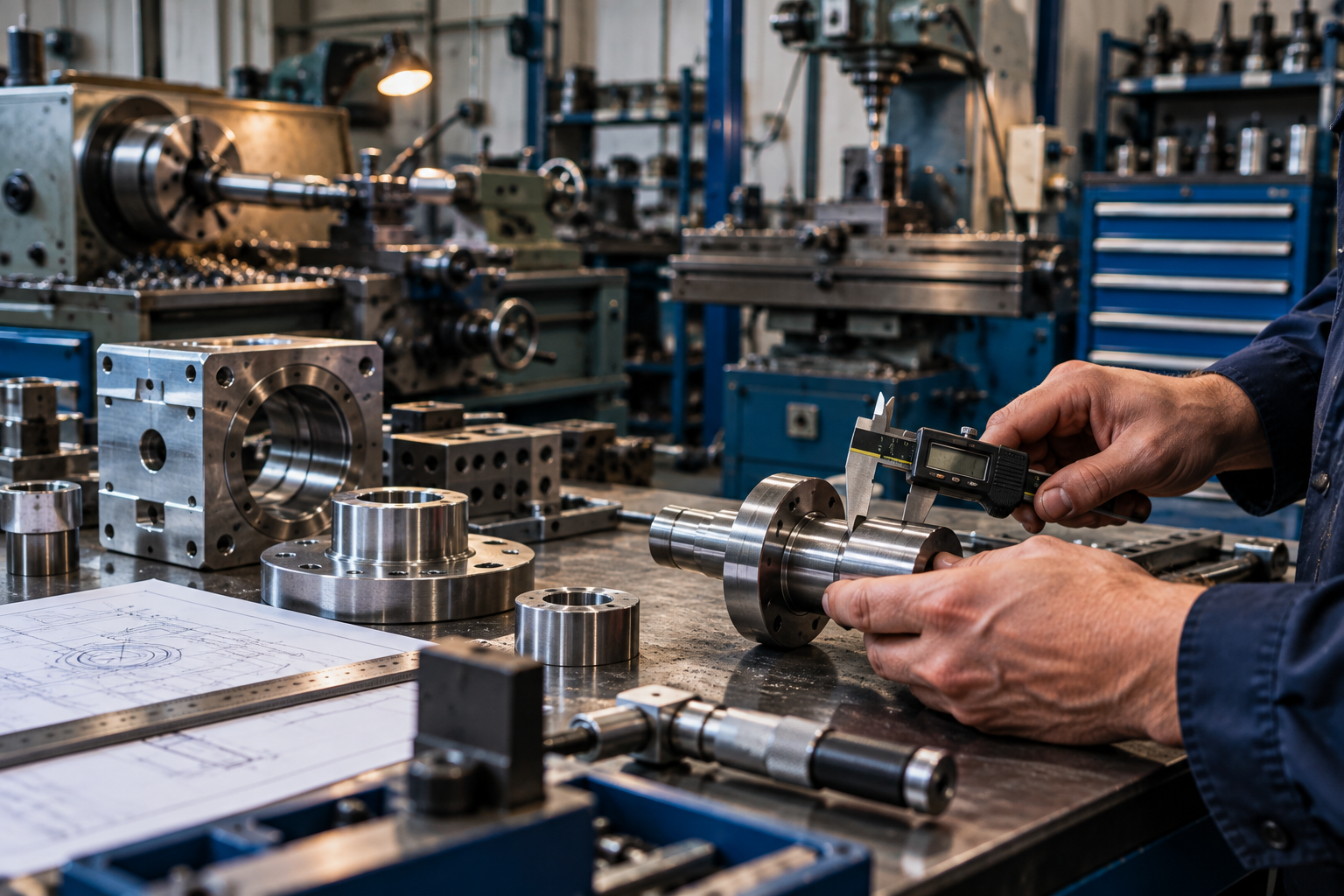
There are projects where a fabricated assembly also needs a machined component, accurately finished bore, turned part, spacer, shaft, flange or modified component.
Rather than separating that work from the rest of the job, we can use machining as part of the engineering process — helping keep the project moving from drawing and fabrication through to assembly.
The exact route depends on the project, but the process is built around understanding what the finished component or assembly needs to do.
Review the application, dimensions, drawings, photographs and what the finished item needs to achieve.
Determine the fabrication, welding, machining and assembly steps needed to produce the solution.
Make the required components and assemblies in the workshop, adapting the route as the project develops.
Check dimensions, fit and practical function before the finished work moves on to the next stage.
The framework project is a useful example of how fabrication fits into a wider engineering requirement. The structure was built and fabricated in-house by our engineers rather than treated as a separate outsourced item.
As the case study develops, this section will become a visual project story showing the requirement, fabrication process, engineering decisions and finished result.
View the Chiller Framework case study →Many of the projects we work on connect fabrication with another engineering requirement. That is where the wider Active Hydraulics workshop capability becomes useful.
Fabricated supports, brackets and assemblies can be developed around the hydraulic equipment they need to carry or connect.
Hydraulic hose assemblies →For larger projects, fabrication and machining can form part of a wider bespoke engineering solution.
Bespoke engineering →Fabricated frames, guards, mounts and supporting structures can be designed around power-pack projects where required.
Hydraulic power packs →Yes. Fabrication and welding are the main focus. Machining supports the wider project where a component needs to be made, modified or finished.
The focus is project-led engineering rather than high-volume production. If you need a machined component as part of a repair, fabrication or engineering project, talk to us about the requirement.
Yes. Drawings, dimensions, photographs and existing components can all help us understand what needs to be produced.
That is often where fabrication is most useful. We can work from the equipment, dimensions and application to develop a practical fabricated solution.
Yes. Fabricated frames, brackets, supports and assemblies can form part of hydraulic, power-pack and bespoke engineering projects.
Send photographs, drawings, dimensions, sketches, existing components and a short description of what the finished item needs to do. You do not need to have every detail worked out before contacting us.
Send a drawing, photographs or dimensions, or talk to the team about the project.